
Live Review: Don McLean – 55 Years On, The American Pie Still Has the Last Word
American Pie 55th Anniversary Tour – 21 October 2026 at The Palais, St Kilda, Melbourne, Australia
Photos & Review by Jeana Thomas
Review by Jeana Thomas Photography
The Palais Theatre didn’t need pyrotechnics or a wall of screens, Don McLean and his three-piece band captivated the audience with a lifetime of songs and the sheer audacity of letting the music do the talking. Celebrating the 55th Anniversary of American Pie on the Australian leg of his tour, Don, the 81-year-old legend, delivered a concert built around rock and roll, intimacy, humour and a singalong that reaffirmed the staying power of his music.
What made the evening special was not the grandeur, but the almost complete absence of pretension. McLean was genuinely surprised at how people still wanted to hear his songs, yet he knew exactly how to hold their attention. Between numbers he shared stories, observations and some barbs about the modern world that prompted plenty of laughter without the conversation overshadowing the music.
One of the evenings most memorable moments came when McLean reflected on how the world had changed during the more than 50 years that he has been visiting Australia. He offered a wonderfully simple distinction, “The trail is poetry, the road is prose, the highway is mathematics.”

For McLean, the trail represents beauty while the highway has come to represent high-rises, numbers and a colder, more impersonal world. His thoughts took a typically wry turn towards Elon Musk, from renaming Twitter to X and his ambitions for Mars and flying cars. McLean joked that the only thing left untouched is the sky. Beneath the humour there was also a genuine affection for beautiful things and a desire to preserve something of the world that inspired him.
It was a fitting introduction to And I Love You So, the love song he has written many years ago. It was something especially appealing to hear from a songwriter who has travelled the world and witnessed so much change returning to the simple business of writing something beautiful.
McLean’s stories often revealed the musical threads running through his own work. Folk, gospel, blues, country and rock and roll all found their place in the set, influences ranging from The Weavers and Lead Belly to Elvis Presley. The rocking energy of Elvis’s That’s All Right sat comfortably alongside the folk-blues tradition of Midnight Special while, This Little Light of Mine illustrated how a straightforward gospel song can have a powerful message without needing elaborate arrangements.

Prior to Midnight Special, McLean explained that many of the folk songs that found popularity around the late 1950s and early 1960s had been brought to a wider audience by earlier artists, especially The Weavers. Midnight Special, he explained, was a prison song collected from Lead Belly, the celebrated blues musician who was in prison and whose remarkable repertoire helped to lay his place in American music history.
The story led naturally into another memory, this time involving Josh White, a major influence on McLean. In 1968, shortly after leaving school, McLean had the opportunity to open for White during a week of performances at Washington DC’s Cellar Door, one of those small venues that could give emerging musicians the attention that might launch a career. At the end of one show they performed Midnight Special together. White put his arms around the young McLean and told him, “This boy is going to take my music forward.’’ It was a moment McLean has never forgotten and he has continued to honour White’s influence throughout his career. The story carried special weight coming from an artist who knows that music is not simply something to perform but to pass on.
Another story showed McLean’s affection for the natural world and his frustration at the way development wipes out the very places that give communities their character. Growing up he spent time in Larchmont Woods, outside New York City, where the 60 acres of woodland included a little baseball diamond surrounded by trees and swamp. He said a home run could send the ball flying into the mud and perhaps startle an osprey into flight as the children went searching for it. Eventually the woods disappeared beneath development, although the name was retained. McLean said, “We often keep the name but get rid of the place.’’ It was a poignant reflection on progress and what can be lost in the way of life and from someone who has spent much of his life traversing the world.
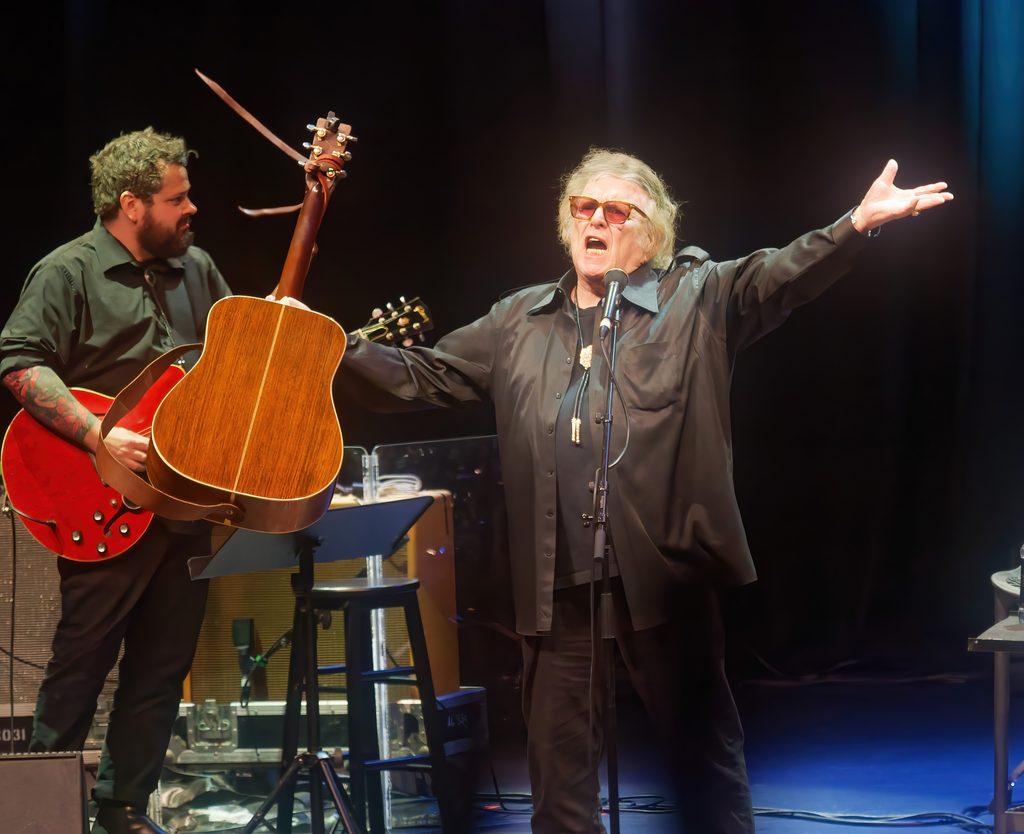
Travel has, indeed, been a constant in McLean’s life. Introducing Jerusalem he recalled how the Mayor of Jerusalem had asked him to write a song for the city. His unexpected journey from a young songwriter making records to becoming an international performer was something he described with a mixture of wonder and wry resignation. Back in the days when a hit record could dominate the few radio stations in a big city, success could propel an artist into a world that they had never imagined.
McLean also looked back at the making of American Pie, recalling producer Ed Freeman and the difficulties surrounding the album’s making. The musicians struggled with the songs, the record company went out of business and creative tensions were threatening to derail the project. Yet the record came together and became one of the defining albums in his career.
The anniversary celebrations were also an opportunity to revive some of the songs away from the obvious hits. McLean spoke of writing Winterwood and remembering how much he liked the song when he first took it into the studio. It was a reminder that even an artist with a song in popular music, has a deep affection for the work that sits outside the spotlight.
There was also room for the lighter side of MacLean’s musical journey. Headroom offered a different take on his songwriting while, Travelin’ Man prompted reflections on the decades that he has spent moving from one country and concert hall to another.

The song brought forth another remarkable anecdote. In Nashville in the late 1970s, McLean recorded albums with some of the city’s finest musicians, including the Jordanaires, the vocal group best known for singing with Elvis Presley. They became his close friends and their work together helped to prove his career was far from over.
In 1984 he performed at Carnegie Hall with the Jordanaires. The group was due to tour with Ricky Nelson in early 1985, around the same time McLean was touring Australia. When news came that Nelson’s plane had crashed, McLean immediately called his friend Gordon Stoker of the Jordanaires. McLean recalled telling him, “I thought you were dead.” Stoker’s reply was that they couldn’t afford to pay the group. It was a sobering reminder of how unpredictable life on the road can be and the many stories that a lifetime in music can leave behind.
The quieter moments were just as affecting. Vincent (Starry, Starry Night), with its acoustic intimacy and beautiful slide guitar from Carl “Vip” Vipperman, drew the audience into the emotional world of the song.
And then there was American Pie.
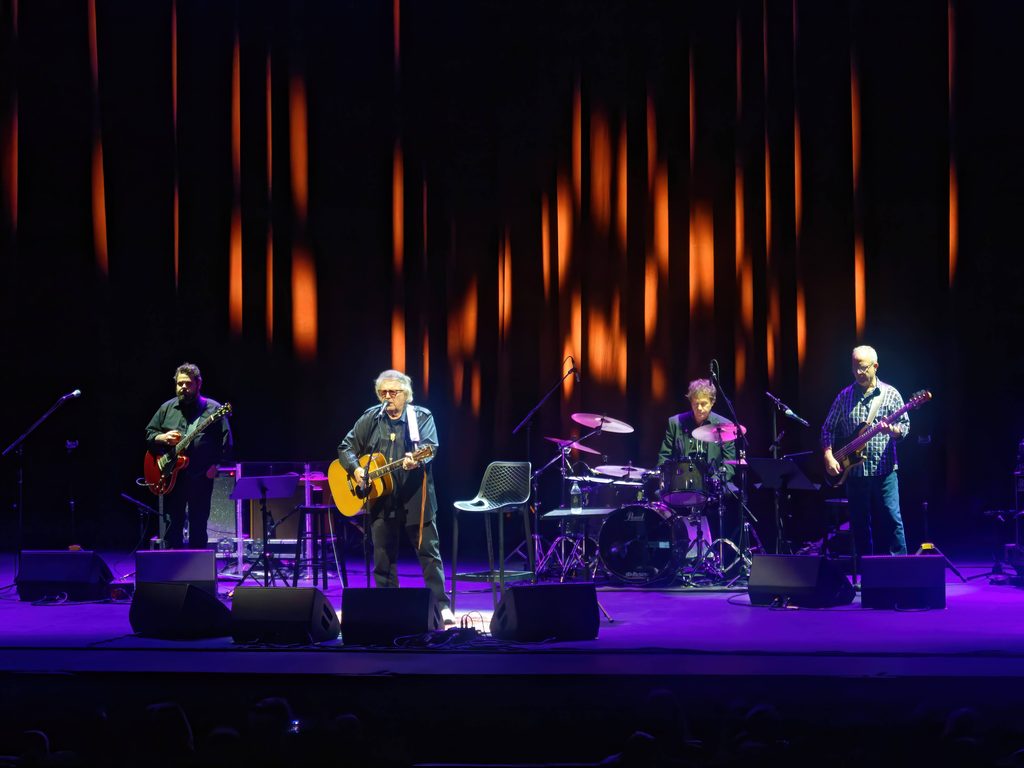
The excitement was immediate as the opening notes rang out and everyone leapt to their feet. Voices joined in, growing louder with each chorus until the Palais Theatre became one huge singalong. The song belonged to everyone there, regardless of whether they had first heard it or how many times they had sung it since. Its ability to capture generations was every bit as impressive as the song itself. By the last note, the audience had made it clear that McLean’s music had firmly in their hearts.
What I took away from the evening was not simply that Don McLean can still deliver a wonderful concert at 81, but the way he allowed the songs to do the work, trusting the music rather than the spectacle. His stories added depth and personality, revealing the influences, experiences and convictions that underpinned the songs without ever turning the evening into a lecture.
There was humour, reflection and a genuine sense of connection between the stage and the audience. McLean’s stories about lost woodlands, the beauty of a simpler world and the musicians who helped shape his career, added further dimension to his reflections on the modern world.
Celebrating 55 years of American Pie, this was not a trip down memory lane, but a reminder that music can outlive the circumstances in which it was created. It can travel across borders and generations and continue to be a source of something new to the people who hear it.
Sometimes all a concert needs is a great songwriter, a small band and a room full of people who know every word. At the Palais Theatre, Don McLean has all three.

SPECIAL SUPPORT ACT: 1927 — A Hit Parade That Still Knows How to Hit
There is a special pleasure in listing 1927 as the act for Don McLean’s performance in Melbourne. This is because the group were an Australian band whose songs have served as the background music to countless lives and the fact that they appeared as special guests at the Palais Theatre gave a highly welcome surge of familiar, radio-style rock before McLean began his folk-tale oriented set.
Given that the group has over thirty years’ experience, the song from 1927 isn’t just a case of nostalgia. It’s true that the melodies still have a certain lift and that the choruses still have the kind of sing-along quality they always had. Moreover, the songs have not lost their ability to take you back to another time. Their collection contains some lasting favourites such as That’s When I Think of You, Compulsory Hero, To Love Me and If I Could, all of which many in the audience knew well before they got to the Palais. Although their history of winning ARIA awards is impressive, what they have shown is that their music still has appeal, or perhaps I should put it that their songs do.
I enjoyed the difference that 1927 offered. Although McLean’s program tended towards stories told, the use of acoustic instruments and the lyrical duration of his work, 1927 gave the audience a more direct experience through big melodic hooks and choruses.
The fact that they were there served to remind people that Australia’s music scene contains a large number of songs which will never be forgotten. For those who had grown up with 1927, it was a pleasant reunion, whereas for people less acquainted with the band, it offered an opportunity to come across a group whose hits have proved their lasting quality.

SUPPORT ACT: Gaudion
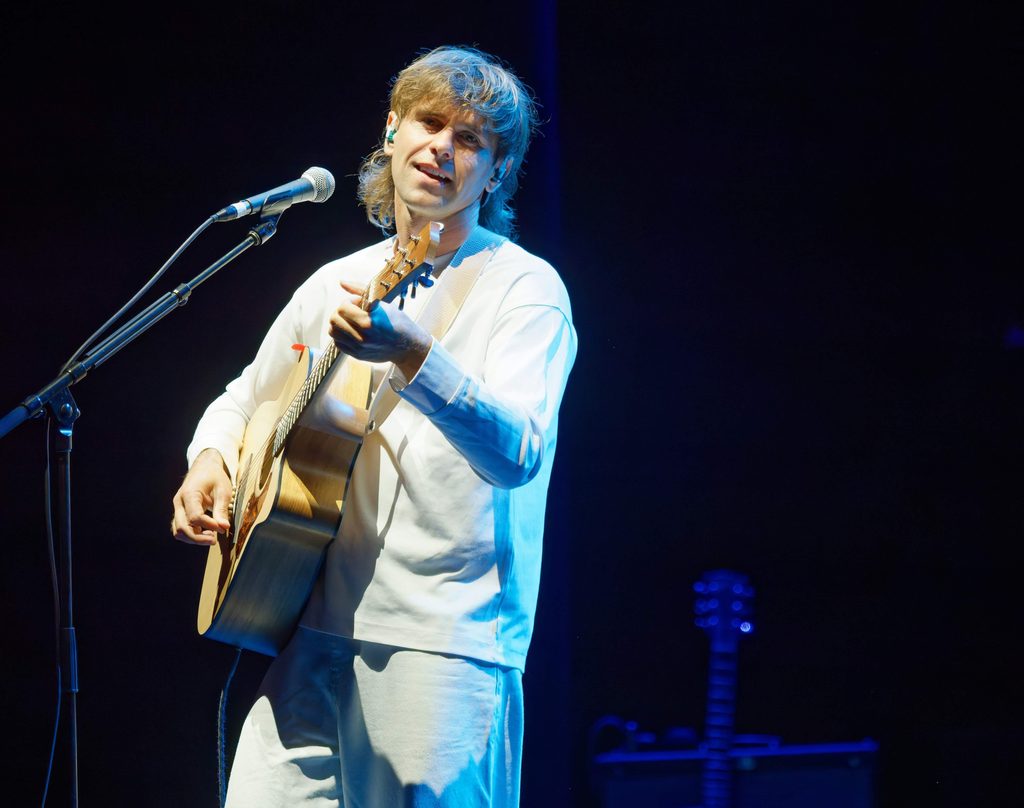
I have never expected that one of the most enjoyable evenings of my life would begin with a man who was simply warming up the place before Don McLean came on stage. Gaudion managed to capture my attention so that I stopped waiting for the main performance and started enjoying every minute of this particular artist’s concert. Warming up the crowd with conversation, he talked and laughed about his childhood and managed to create a connection with the audience. Playing on an acoustic six-string guitar, Gaudion sounded like a storyteller who could charm anyone with his indie-pop, folk-pop, country and acoustic rock. It was fascinating to listen to him and get to know him better.
Hillston, a small town located 1000 km to the west of Sydney, is where the artist spent his childhood, growing up on a cherry farm. “It was a fairly isolated place – we had four boys at school,” he remembered with a smile, adding that they are still friends. Gaudion’s family lost the farm due to severe drought, and now his parents live in Tasmania. I liked that he did not try to romanticise his childhood and make sad stories out of it, but told amusing tales instead.
A song he wrote Grandpa sounds melancholic and it’s about a boy who grows up and realises that he has wasted his youth, chasing an illusive girl, thinking about a girl and running around the world for her. “Now I’m just an old man and I don’t know how it happened,” sings Gaudion. This is a song full of remorse and the main reason for this feeling is that the protagonist of the song is growing up and there is nothing he can do about it.
Gaudion has managed to charm me, his stories were engaging and sometimes, even heartbreaking, but they were never exaggerated. This was his unique way of telling stories and I admired him for it. Gaudion knew how to surprise everyone, including himself.
About the Writer: Originally hailing from Western Australia, Jeana Thomas now thrives in the vibrant city of Melbourne. Amidst the hustle of her role in a prominent teaching hospital, she also navigates the dynamic world of entrepreneurship as the owner of a medical transcription company. Beyond her professional endeavours, Jeana finds solace and joy in the rhythm of music, the allure of travel and the artistry of photography, with a particular passion for wildlife photography.

About SAM: Sheldon Ang Media (est. May 2022) have been accredited to over 250 of the hottest acts including Taylor Swift (ERAS Tour in Sydney), Coldplay (Perth Melbourne), Backstreet Boys, KISS, Iron Maiden, RHCP and P!NK with reviews shared by the likes of Suzi Quatro, Belinda Carlisle, Roxette, Tina Arena, UB40, Delta Goodrem, Leo Sayer and Tina Arena on social media. The founder has interviewed rockers Suzi Quatro, Ace Frehley (KISS), John Steel (The Animals), Frank Ferrer (Guns N’ Roses), Phil X (Bon Jovi), Andrew Farris (INXS), and over 70 other artists. He’s also a contributor on Triple M Radio as a music journalist.


