Live Review: Lily Allen Performs West End Girl in a Perth Curtain Closer
By Sheldon Ang
Photography by Emma Louise Smith
Lily Allen Performs West End Girl – 1 November 2026 – at RAC Arena Perth Western Australia
Perth is often the final stop on major tours, or the starting point for a new journey.
After 60 shows across the UK, Ireland, the US and Australia, Lily Allen brought her West End Girl tour to a close in the world’s most isolated city. For a show steeped in betrayal and melancholy, Perth felt like a fitting place to end the journey.
West End Girl is a concept album tracing the turmoil surrounding the breakdown of Allen’s marriage to actor David Harbour. The story unfolds across 14 tracks, and the tour brought that narrative to life on stage.
With song titles like Pussy Palace and more syllables than my mouth can juggle, we expected the West End Girl tour to be one hell of a ride, filled with bite, sass, zest, vulnerability and classy filth, documented on the Brit’s 6th studio album.
Indeed, fans were swarmed with the bite, sass, zest, and classy filth in the live version. It is a musical theatre, as we were bedazzled by Lily Allen’s beauty, grace, charm, heightened sex appeal and “Fuck You” attitude all at once in under an hour.
Here’s how the night unfolded.
The Dallas Sextet opened the evening with string arrangements of Allen’s classics, as the crowd turned the arena into one giant karaoke session. It was the calm before the storm: a familiar, communal warm-up before vulnerability and chaos took centre stage.
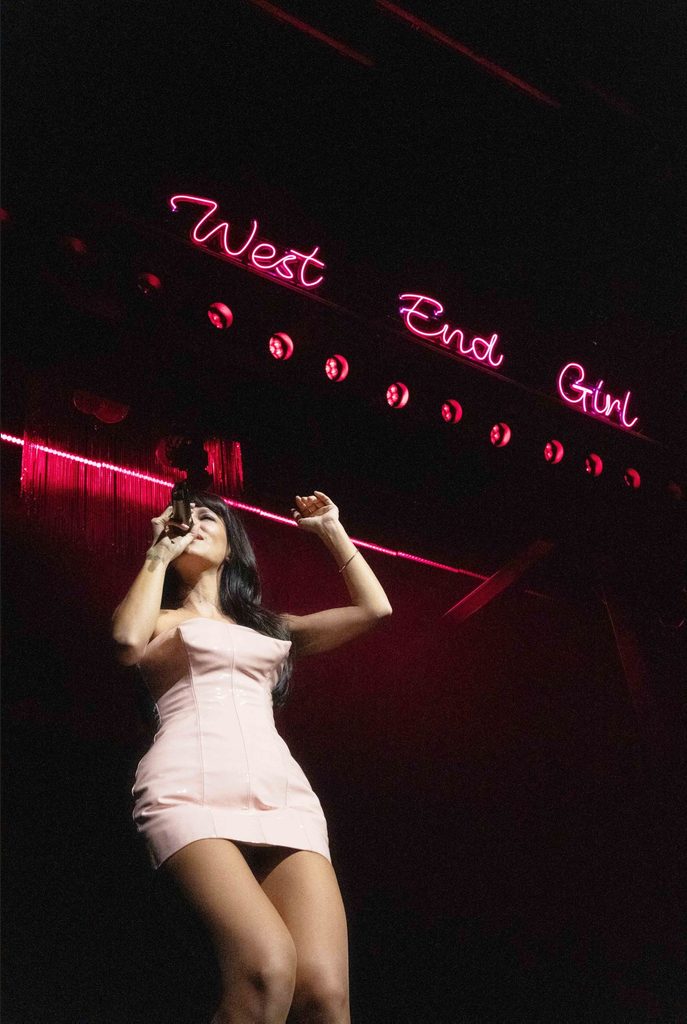
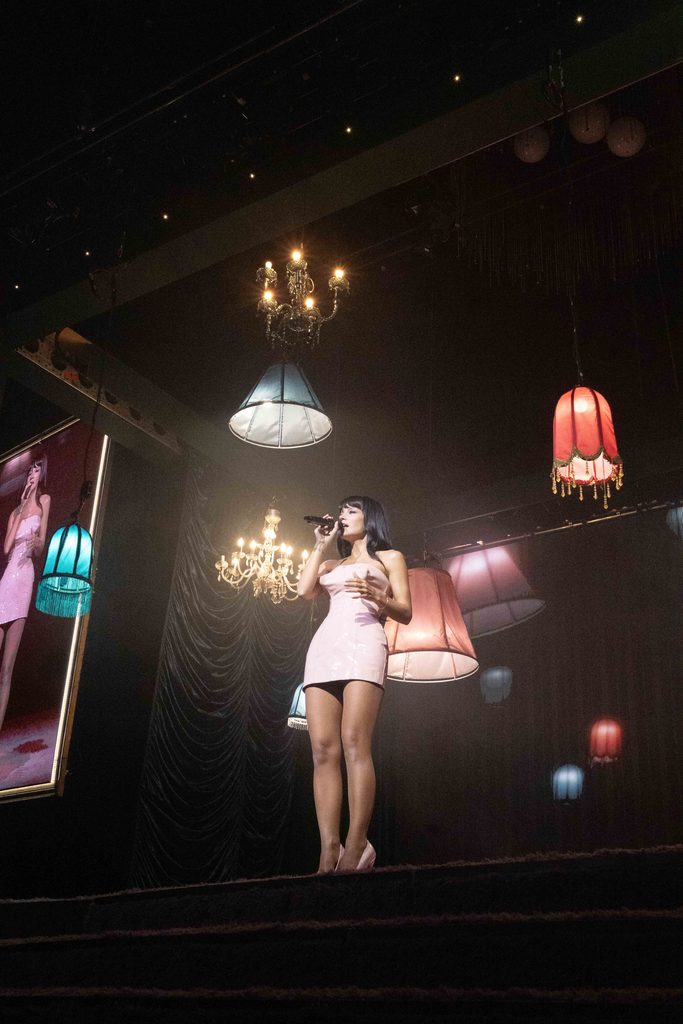
Allen’s set began, as expected, with the title track, its heavy bass setting a dramatic tone. The staging was defiantly retro, evoking the 1970s and recalling the visual style of her “Not Fair” video.
A red “West End Girl” sign glowed above the stage. A luminous proscenium arch and rich velvet curtains gave RAC Arena the intimacy of a theatre, while suspended screens hovered overhead like illuminated marquees. The staging offered close to 10,000 fans a window into a private chapter of Allen’s life.
Lily wore a shiny silver metallic mini dress in a champagne fold that caught the stage lighting. She looked elegant and posh in her V-neckline with a fitted, corset-like bodice. The white satin sash wrapped around the waist accentuated her figure, making someone half her age envious. Then again, she is Lily Allen, at the peak of her visual sexiness.
So far, the evening felt breezy. That was about to change.
The phone rang: a call from her husband. A moment of silence gave way to screams, raised hands and jeers. “Hang up the phone” was part of the unsolicited support, before others joined in. “Leave the fuckwit!”
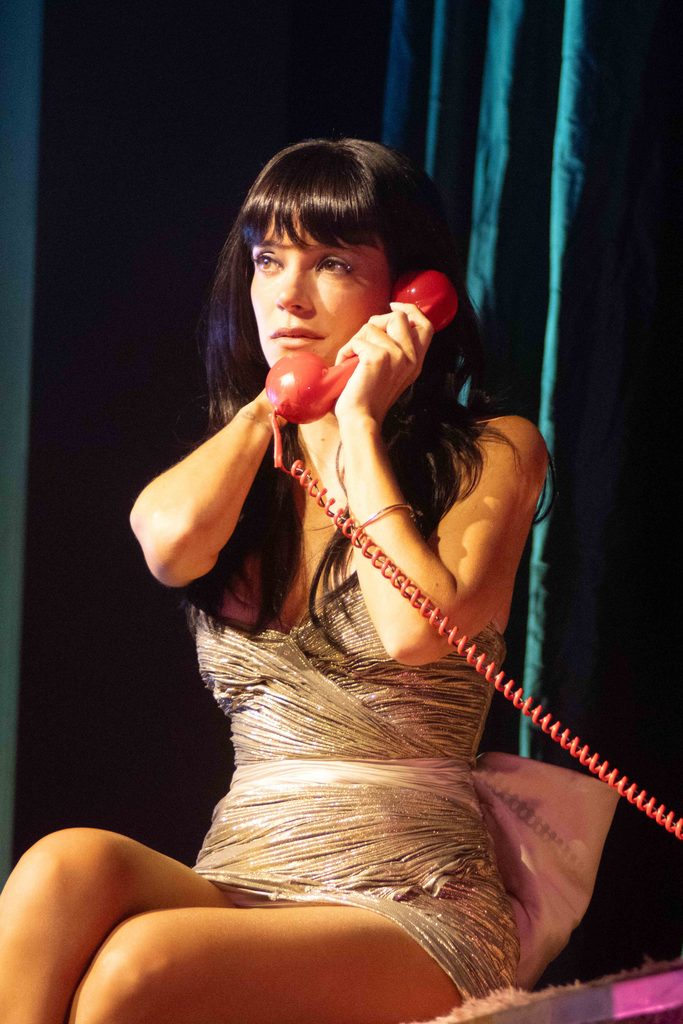
The crowd’s familiarity with the story evoked the devotion of a cult following, amplified to arena scale. Those who weren’t aware were a little surprised by the level of fandom Lily Allen carries. Allen conveyed the disappointment so vividly that the conversation seemed to unfold in real time.
From there, darkness settled over the performance. In “Ruminating”, Allen’s vocal delivery and repetition channelled the story’s mounting anxiety. Even her smallest movements sparked cheers, a response that occasionally jarred with the production’s musical-theatre atmosphere.
By this point, Allen’s ability to inhabit the story on stage was unmistakable.
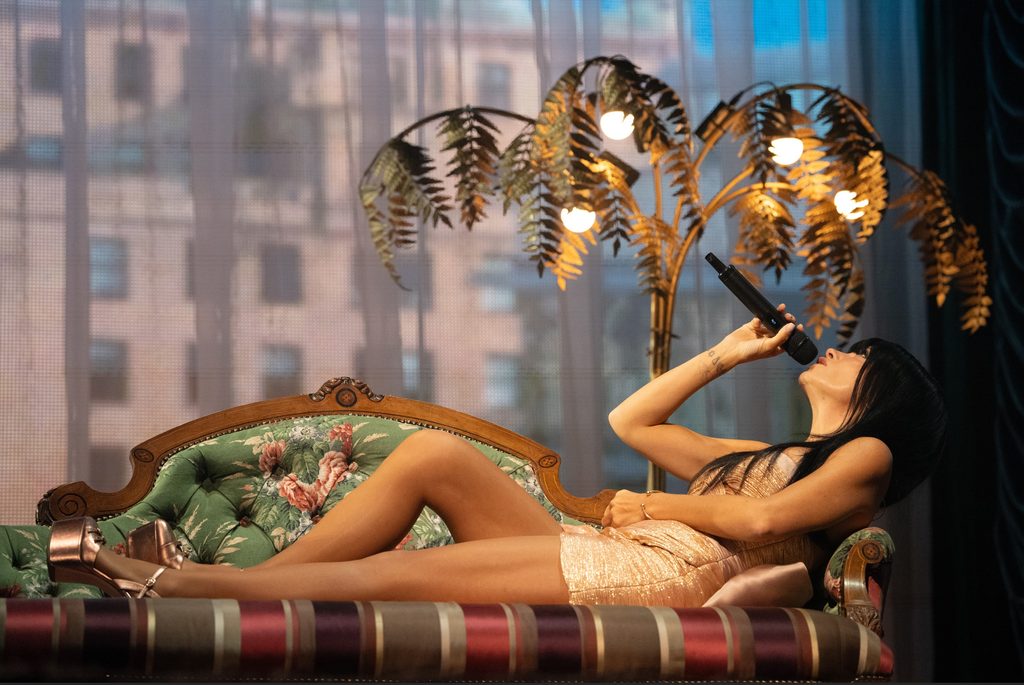
From there, the act shifts from PG to a more MA15 with the language use and the suggestive moves, as she changes into a vintage cabaret or boudoir styling, while she lay on her back on the antiquated couch, forming angles with her legs, before sitting up and posing with legs apart for a split second, sparking delirium from the fans. From the conformity of West End Girl, Lily Allen moved into a state of disconnection and escapism, drifting through a haze between reality and imagination. She was “Sleepwalking”, after all.
Who the fuck is Madeline?
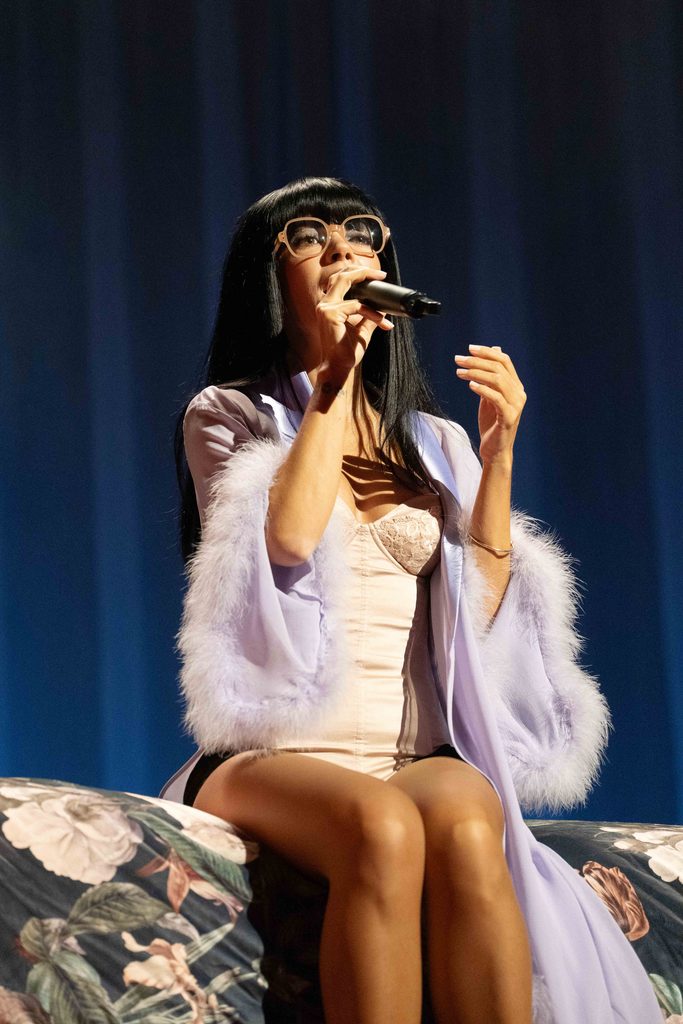
A flamenco-paced passage followed, showcasing the conversational singing style that many of us love about Allen. Her clipped, staccato delivery gave the relationship’s self-doubt a sharp edge. It was a clutch performance. Then a gunshot rang out, signalling another dramatic turn.
With the marriage collapsing, the story turned towards its fallout.
A one-minute intermission followed, offering a brief pause in the unfolding drama. The production had been deliberately spare: Allen was the sole performer on stage, with no dancers or musicians and only a handful of props, including a couch and a bed. Against the velvet curtains and luminous proscenium arch, those everyday furnishings gave the story a domestic intimacy within the arena. This was no Andrew Lloyd Webber spectacle with an ensemble cast, nor did it appear to be trying to become one. Instead, the theatrical weight rested on Allen’s delivery, gestures and movement through the narrative. With little to distract from her performance, the shifts between anxiety, confrontation and grief became the production’s central drama.
The story then took us back to Brooklyn, New York.
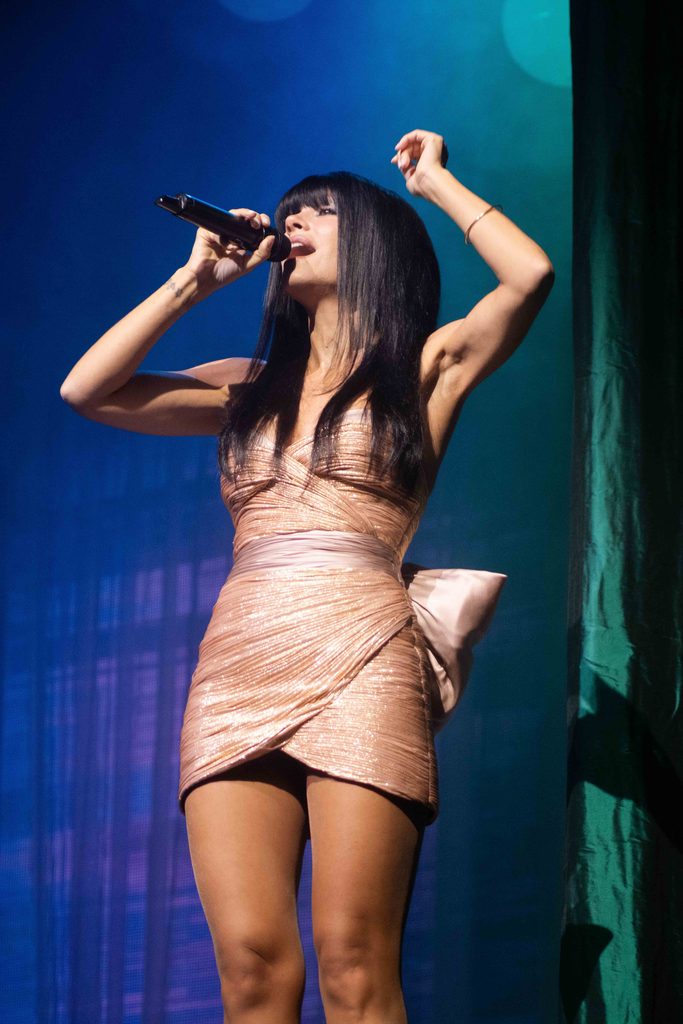
The pace is maintained, teasing the night with more drama. We find several sex toys in Pussy Palace upon discovering that her husband was a sex addict. Chaos. This track is indeed one of the most well-known ones, thanks to its sing-along tune. There were More sex toys popped in Nonmonogamummmy – although Liy confessed she didn’t “want to fuck with anyone else,” her private problems became a public spectacle, with a lot of gossip, rumour and commentary; Lilly played the fallout like Brooke would in The Bold and The Beautiful.
As the relationship unravelled, fans waved illuminated phones during “Just Enough”, heightening the drama while offering a shimmer of consolation. Acoustic guitar softened the atmosphere, and the lights gave the arena an almost celebratory glow. Yet the ballad posed a painful question: had love ever been enough to save the relationship? By “Dallas Major”, the reality of the loss had sunk in. Allen moved towards acceptance, before “Let You W/In” and “Fruity Loop” offered a sense of rebirth.
In just under an hour, we had witnessed glamour, vulnerability, grief and eventual acceptance. West End Girl emerged as a story of transformation, tracing the journey from a life falling apart to a woman finding herself again.
Allen’s performance was a masterclass in visceral storytelling. She made the narrative feel as much as heard; even a first-time listener could have followed its emotional arc if it were performed in a foreign language.
Could the evening have offered more instead of a 60-minute spectacle? For me, a 30-minute encore of classics such as “Not Fair”, “Smile”, “Somewhere Only We Know” and “Fuck You”, backed by a band, would have sealed the experience, and perhaps helped fill the 15,000-capacity arena. After such an emotionally concentrated performance, those familiar songs could have offered a release: a chance to trade the intimacy of the story for the shared exhilaration of an arena singalong. Yet that addition might also have diluted the lingering impact of West End Girl, turning its carefully drawn conclusion into a prelude to the hits. Something was compelling about allowing the narrative to stand on its own, without reaching for the reassurance of a conventional encore. As it stood, Allen left us with the story rather than the hits, and with its emotional aftermath rather than an easy crowd-pleaser. It was a successful gamble: the restraint gave the ending room to resonate.
Sheldon Ang Media would like to thank Frontier Touring and Lily Allen for the photo and review accreditation.
About Sheldon Ang Media: Sheldon Ang, photojournalist, writer and the founder of Perth-based Sheldon Ang Media (est. May 2022) has been accredited to over 250 of the hottest acts including Taylor Swift (ERAS Tour in Sydney), Coldplay (Perth), AC/DC, KISS, Metallica, Iron Maiden, RHCP and P!NK with reviews shared by the likes of Belinda Carlisle, UB40, Delta Goodrem, and Roxette. He has interviewed the late Ace Frehley (KISS), Suzi Quatro, John Steel (The Animals), Frank Ferrer (Guns N Roses), Phil X (Bon Jovi), Andrew Farris (INXS) plus over 100 artists. He’s also a contributor on Triple M Radio as a music journalist.