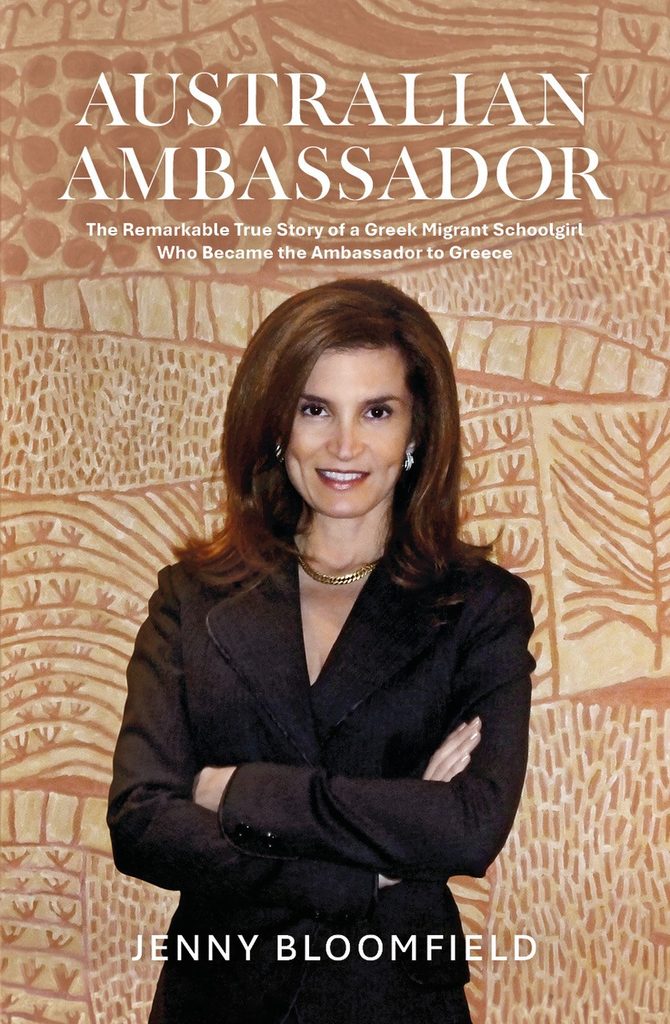
Book Review: Australian Ambassador by Jenny Bloomfield
History is not always content to remain in the background. Occasionally it takes a seat at the table, demands the bill and insists that everybody account for themselves. In Jenny Bloomfield’s Australian Ambassador, it does so with savage timing. As a twelve-year-old, Bloomfield left Greece for Australia, carrying the luggage of childhood and the less manageable freight of migration: uncertainty, embarrassment, the wish to belong. Decades later she returned as Australia’s ambassador to Athens, the first woman and first Greek Australian to hold the position. The journey has the impeccable symmetry of fiction. Its circumstances, unfortunately for Greece, were all too real. The country she encountered was buckling beneath sovereign debt, austerity and political rage. Governments faltered; creditors prescribed remedies; ordinary Greeks paid for mistakes they had scarcely been invited to make. Bloomfield writes about these events with a diplomat’s patience rather than a commentator’s appetite for spectacle. Sometimes the explanations become a little dutiful, but they give the book a valuable sense of proportion. What keeps the account alive is its movement between the official and the intimate. One moment there are prime ministers and negotiations, the next a schoolgirl learning English, a parent making a difficult choice, or a husband cooking dinner. James, Bloomfield’s companion in marriage and public service, is more than a figure at the edge of her career. His warmth anchors the story; his death in 2016 gives its final pages an ache that no diplomatic achievement can remedy. Bloomfield’s prose is direct, occasionally lyrical, and disinclined to conceal its conclusions. A more ruthless writer might have allowed some scenes to speak for themselves. Yet her candour is also the book’s strength. Australian Ambassador is, finally, about the curious arithmetic of belonging: leave one homeland, gain another, return to the first, and discover that neither has been diminished. The result is a generous, affecting memoir of a life lived between nations—and, more importantly, among people.